
 SCROLL
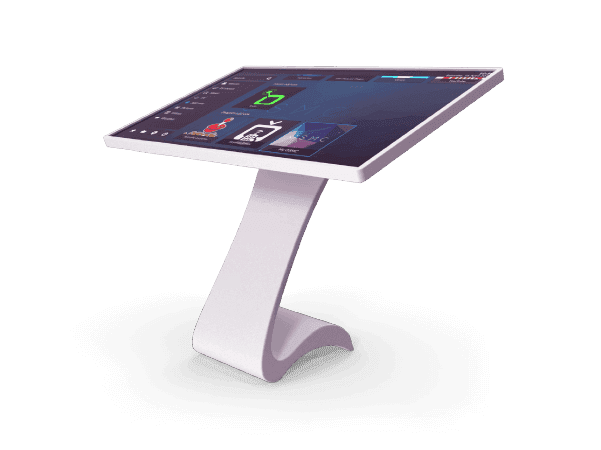
A smart kiosk is an interactive terminal that provides information or services through a digital screen installed in a public or commercial location.
Smart kiosks can incorporate technologies such as touchscreens, scanners, smart sensors, and cameras. When connected through Cellular IoT, these systems can transmit operational data, receive updates, and communicate with cloud-based application platforms.
Unlike a traditional standalone kiosk, a connected smart kiosk can become part of a wider IoT deployment that supports remote operations across multiple locations.
Cellular IoT enables reliable connectivity for distributed smart kiosk deployments, allowing organizations to centrally monitor devices, manage software updates, and maintain consistent service across geographically dispersed locations.
Smart kiosks may be deployed in locations where fixed internet connections are unavailable, unreliable, or difficult to maintain. At the same time, operators need kiosks to exchange data with application platforms and remain operational across distributed environments.
A smart kiosk connectivity solution can help address several deployment challenges:
Intermittent connectivity at remote or distributed locations
The operational cost of maintaining a large kiosk fleet
The need to update deployed devices without repeated field visits
Limited visibility into kiosk activity and operational data
The complexity of managing connectivity across regions and networks
The need to integrate kiosk hardware with cloud-based applications
Cellular IoT provides a dedicated connectivity layer between the kiosk application board and the platform used to manage the wider kiosk system.
Cellular IoT enables smart kiosks to communicate through mobile networks without depending entirely on local Wi-Fi or fixed-line infrastructure.
For smart kiosk manufacturers and operators, Cellular IoT can support:
Cellular IoT modules can connect kiosks deployed across retail stores, transport hubs, hospitals, airports, public spaces, and other distributed environments.
Over-the-air updates can reduce the need to make changes manually at each deployed kiosk. This is particularly relevant when network technologies, software configurations, or connectivity requirements change.
Connected kiosks can transmit data that supports the tracking, routing, stocking, scheduling, and maintenance of services.
Using only the features required for the IoT application can help reduce unnecessary attack surfaces and support more focused system deployments.
A connectivity-management platform can help teams manage cellular connections and eSIM-enabled modules across a growing kiosk deployment.
The main kiosk application or asset-management platform continues to manage and monitor the device. The Cellular IoT platform operates as the connectivity layer supporting that primary system.
The use case note provides a technical overview of smart kiosk connectivity and explains:
What a smart kiosk is
The industry and business challenges associated with smart kiosk deployments
How Cellular IoT supports connected self-service kiosks
How cellular modules enable communication between kiosks and application platforms
How OTA updates support deployed kiosk systems
How real-time data aggregation supports kiosk operations
Where smart kiosks are being applied across industries
How Cavli Wireless supports the kiosk connectivity layer
Which Cavli smart modules are referenced for smart kiosk applications
The complete guide also contains technical illustrations and product-specific information that are available after submitting the download form.
Selecting connectivity for a smart kiosk involves more than choosing a network connection. Engineers, product teams, and kiosk OEMs should evaluate how the complete connectivity layer fits the application and deployment environment.
Important considerations include:
The required cellular technology depends on the kiosk application, data requirements, deployment region, and network availability.
Cellular modules may differ in footprint, power consumption, and network capabilities. The selected module must align with the kiosk hardware design and application requirements.
An integrated eSIM can simplify connectivity provisioning and support deployments that operate across different networks or regions.
Remote updates can help teams adapt deployed kiosk systems without making physical changes to every device.
A centralized platform can help teams manage cellular connectivity and eSIM-enabled modules across a kiosk fleet.
The connectivity layer should support the primary platform responsible for managing the kiosk application or device assets.
The downloadable guide provides a closer look at how these elements fit into a smart kiosk system without replacing the kiosk's primary application-management platform.
Cellular-connected smart kiosks can support self-service and information applications across several industries.
Retail environments can use connected kiosks to provide self-service experiences and support access to information across stores and other customer locations.
Micro markets use self-service kiosk technology to support unattended retail environments and distributed points of service.
Connected information kiosks can provide residents and visitors with services and information within smart city environments.
Restaurants and hotels can use smart kiosks to support self-service interactions and reduce dependence on traditional service counters.
Interactive kiosks can help visitors access information and services throughout large commercial locations.
Banks can deploy connected self-service terminals to support customer-facing services across branch and public locations.
Public-transport environments can use connected kiosks to provide information and self-service functions at distributed transit locations.
Healthcare facilities can deploy self-service kiosks to support information access and other patient-facing processes.
Airports can use connected kiosks across terminals where continuous access to operational systems and services is important.
Supermarkets can deploy self-service terminals across checkout and customer-service environments.
Cavli Wireless combines cellular IoT modules, integrated eSIM capabilities, and cloud-based connectivity management to support connected kiosk applications.
Cavli C-Series modules provide cellular connectivity options across LTE and LPWAN network technologies. The range includes modules with different footprints, power requirements, and network capabilities for different IoT applications.
The Smart Kiosk Use Case Note references the following Cavli modules:
C42GM
C16QS
C41QS
C42QM
C10GS
C10QM
The complete guide provides product-specific network and regional information. Module selection should be based on the intended application, deployment region, and available network technology.
Cavli smart modules can integrate Hubble eSIM capabilities with cellular hardware. This supports connectivity provisioning as part of the wider IoT connectivity stack.
Cavli Hubble CaaS Cloud brings together cellular modules, eSIM management, and connectivity management.
For a smart kiosk deployment:
Cavli smart modules provide cellular connectivity within the kiosk.
Hubble eSIM supports connectivity provisioning.
Cavli Hubble provides the connectivity-management layer.
The primary kiosk application platform continues to manage and monitor the kiosk device or asset.
This separation allows the connectivity layer to support the main kiosk platform without being positioned as a replacement for it.
Cellular connectivity can support kiosks operating across locations where local internet infrastructure may be inconsistent.
OTA capabilities can reduce the need to visit each kiosk when connectivity-related updates or upgrades are required.
A connectivity-management platform can give teams a central environment for managing connections and eSIM-enabled modules.
Real-time data aggregation can support the tracking, routing, stocking, scheduling, and maintenance of kiosk-related services.
Cellular modules supporting different LTE and LPWAN technologies allow product teams to evaluate connectivity according to application and regional requirements.
An integrated module, eSIM, and cloud-connectivity approach can simplify the connectivity foundation for kiosk deployments that expand across locations or regions.
This use case note is intended for:
Smart kiosk manufacturers
Kiosk OEMs and ODMs
IoT product manufacturers
Embedded hardware engineers
Cellular connectivity engineers
IoT solution architects
Product managers
Technical procurement teams
Systems integrators
Retail technology providers
Smart city solution providers
Hospitality and self-service technology teams
Operations teams managing distributed kiosk fleets