
 SCROLL
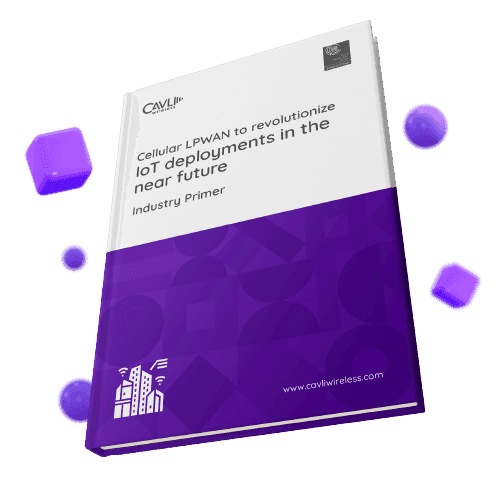
Cellular LPWAN refers to low-power wide-area cellular networks such as NB-IoT and LTE-M designed for long-range, low-bandwidth IoT communication. According to the introduction in the document (page 2), LPWAN enables devices to transmit small amounts of data periodically across long distances with extremely low power consumption and multi-year battery life. This makes Cellular LPWAN ideal for massive IoT deployments, where reliability, security and cost-efficiency are crucial. As IoT scales globally, NB-IoT and LTE-M provide the backbone for smart utility systems, smart cities and industrial telemetry—supported by licensed spectrum and standardized 3GPP infrastructure.
The PDF highlights NB-IoT and LTE-M (page 5) as the two primary 3GPP LPWAN technologies shaping modern IoT deployments. NB-IoT delivers exceptional indoor penetration, extended coverage and ultra-low power usage—suitable for smart meters, sensors and fixed IoT devices. LTE-M supports mobility, voice, higher data rates and broader device versatility, making it the preferred choice for logistics, micro-mobility, retail operations and asset tracking. With more than 141 operators investing in NB-IoT globally (page 6), both standards are now foundational to national IoT strategies, enabling scalable, secure and interoperable deployments across continents.
A major portion of the document (pages 7–13) compares Cellular LPWAN with unlicensed LPWAN options such as LoRa, Sigfox and Weightless-N. Cellular LPWAN operates on licensed spectrum, ensuring predictable performance, lower interference and telecom-grade QoS across dense urban environments. Unlicensed LPWANs offer lower cost and easier customization but suffer from limited scalability, duty-cycle restrictions, vulnerability to interference and fragmented global coverage. This fundamental difference makes NB-IoT and LTE-M more suitable for applications requiring nationwide or cross-border deployment, guaranteed uptime, reliable downlink and strong built-in security.
The global coverage map in the PDF (page 14) shows widespread NB-IoT and LTE-M adoption across North America, Europe and Asia. The document emphasizes that LTE-M is dominant in North America while NB-IoT is widely deployed in Europe and Asia (page 15). This broad operational footprint enables IoT companies to deploy a single hardware design across multiple regions while relying on consistent network behavior. Cellular LPWAN benefits from telecom-grade infrastructure, roaming agreements and international standardization—making it far more scalable than region-dependent unlicensed LPWAN networks.
The file details high-impact industry use-cases across pages 16–17, including smart metering, smart agriculture, micro-mobility, manufacturing, retail, healthcare, safety and energy management. Cellular LPWAN enables reliable remote monitoring, automated meter readings, asset tracking, predictive maintenance and distributed sensing networks—all on multi-year battery life. With licensed-spectrum reliability, deep indoor penetration and integrated eSIM connectivity, NB-IoT and LTE-M unlock enterprise-grade IoT solutions that operate across wide geographic areas without manual intervention. This positions Cellular LPWAN as a central technology driving the next decade of IoT innovation.